Montenegro
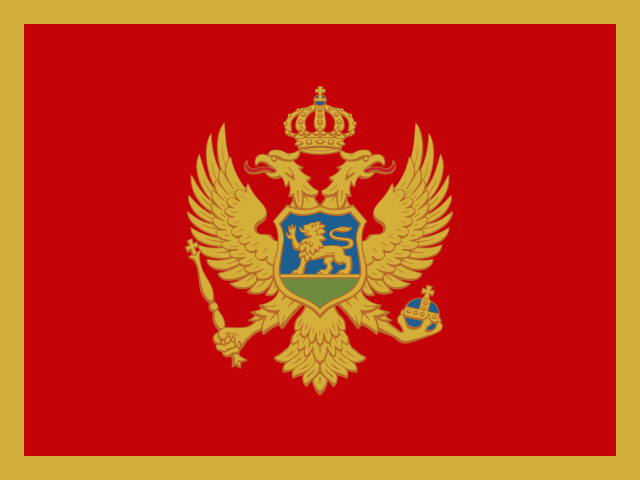
- Region
- Europe · Southeast Europe
- Capital
- Podgorica
- Population
- 623,129 (2025)
- Government
- parliamentary republic
- Currency
- Euro (EUR)
- Official languages
- Montenegrin
- Spoken languages
- Serbian 42.9%, Montenegrin (official) 37%, Bosnian 5.3%, Albanian 5.3%, Serbo-Croat 2%, other 3.5%, unspecified 4% (2011 est.)
- Written scripts
- Latin and Cyrillic
- Area
- 13,812 km²
- Coastline
- Coastal
- UN member
- Yes
- Affiliations
- IMF, NATO, WCO, WTO
- Borders
- Albania , Bosnia and Herzegovina , Croatia , Kosovo , Serbia
Political stability
72 / 100
Economic stability
52 / 100
Population stability
24 / 100
0–100, higher is more stable. Political: World Bank governance score. Economic: government effectiveness, regulatory quality, and inflation proximity to 2% (World Bank). Population: stability of growth and net migration rates (World Bank).
Trade profile
- Key exports
- electricity, aluminum, copper ore, aluminum ore, packaged medicine (2023)
- Key imports
- refined petroleum, cars, electricity, packaged medicine, aluminum (2023)
- Natural resources
- bauxite, hydroelectricity
- Primary route
- Adriatic and Aegean ports into Mediterranean services
- Secondary route
- Danube and overland EU corridors
Trade research
- WTO trade profile — tariffs, trade in goods and services, top partners
- World Bank country data — GDP, trade share of GDP, logistics indicators
- OEC trade profile — export/import composition and partners, visualized
- ITC Trade Map — detailed trade statistics by product (ITC/UN Comtrade)
- CIA World Factbook — geography, economy, transportation infrastructure
xin.bz can watch Montenegro for you — email alerts when new disruptions hit. Start free
Sources: mledoze/countries (ODbL), CIA World Factbook (public domain), World Bank Open Data (CC BY-4.0), flag-icons (MIT). Stability scores are xin.bz composites of the cited World Bank indicators; routes and commodity notes are xin.bz assessments. Informational only — verify with official sources.